Securing a pest control service in Gilbert requires active mechanical exclusion and targeted desert treatments rather than superficial chemical sprays. Homeowners across the East Valley face aggressive Arizona bark scorpion activity, expansive subterranean termite colonies in caliche soils, and roof rat nesting along citrus-lined canals.
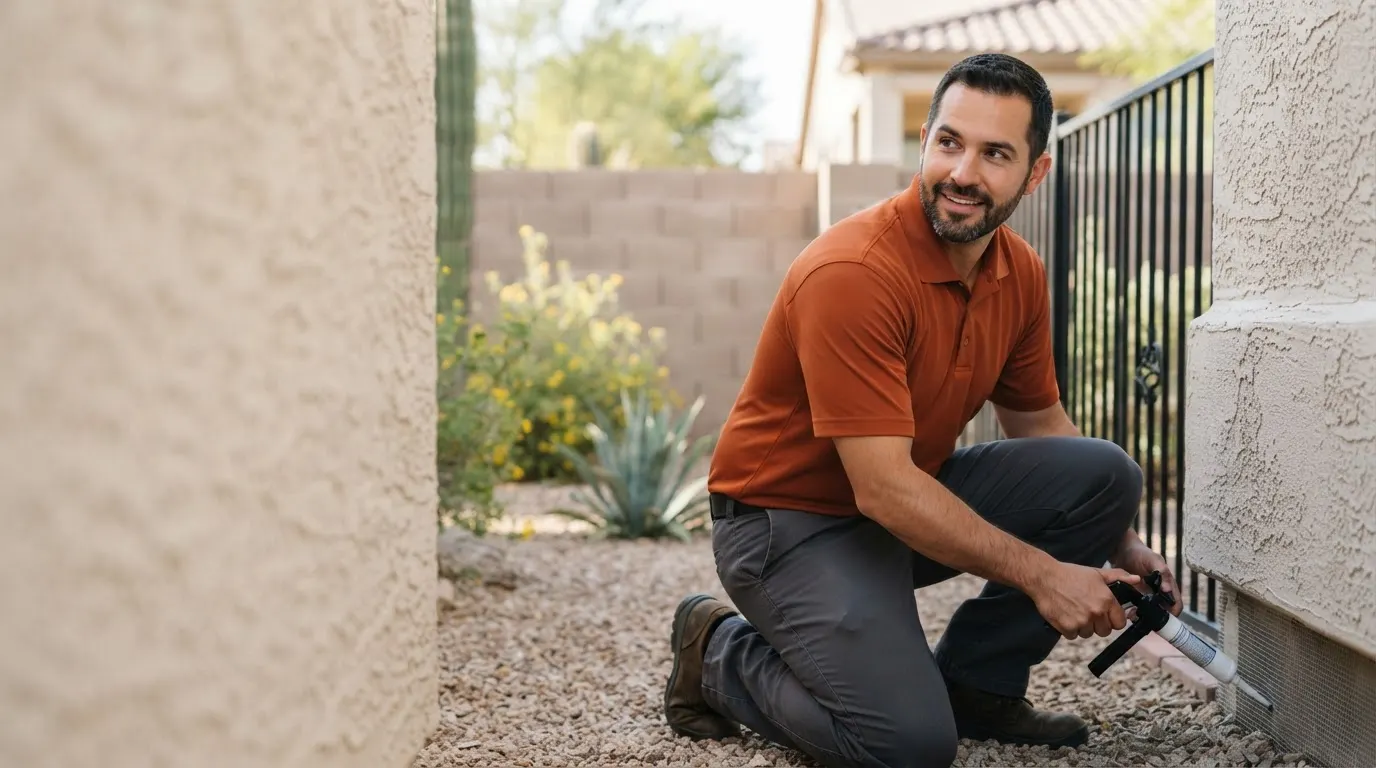
A pest control service in Gilbert is an integrated pest management and perimeter exclusion solution designed to eliminate desert scorpions, subterranean termites, roof rats, and urban desert insects from residential and commercial structures.
Every service reflects the same meticulous attention to detail, whether it's a single job or a larger pest control service project across Gilbert.
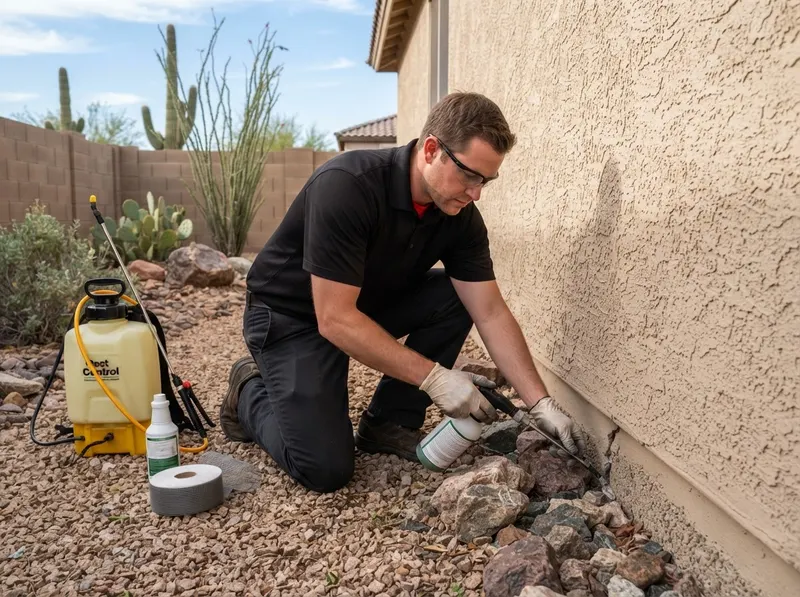
Specialized mechanical sealing of home weep screeds, stucco J-channels, and utility penetrations paired with targeted micro-encapsulated barrier sprays. Formulations remain active under extreme desert heat to stop scorpions before they breach interior baseboards. Technicians install copper mesh and specialized elastomeric sealants along perimeter baseboards, concrete expansion cuts, and patio transitions to prevent climbing. Exterior wall voids receive micro-dusting applications that eliminate scorpions nesting within hollow structural block fences and exterior siding panels.
Get a quote →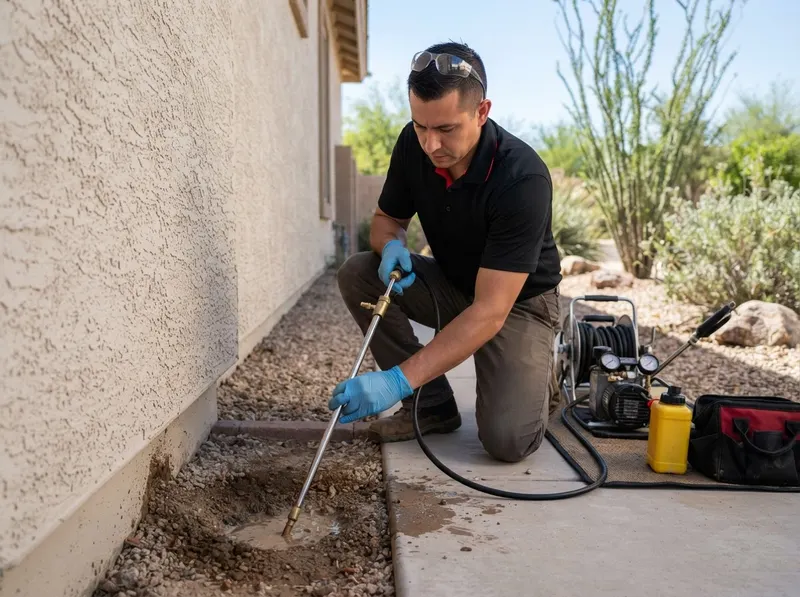
Precision trenching and direct non-repellent liquid termiticide injections into structural foundation margins and caliche subsoils. Designed specifically to intercept Heterotermes aureus worker galleries beneath concrete slabs and garage stem walls. Technicians dig 6-inch by 6-inch trenches adjacent to exterior foundation walls, applying four gallons of finished solution per ten linear feet to establish a continuous chemical zone. Post-construction concrete drilling addresses covered patio slabs, walkways, and interior plumbing penetrations where subterranean colonies move upward.
Get a quote →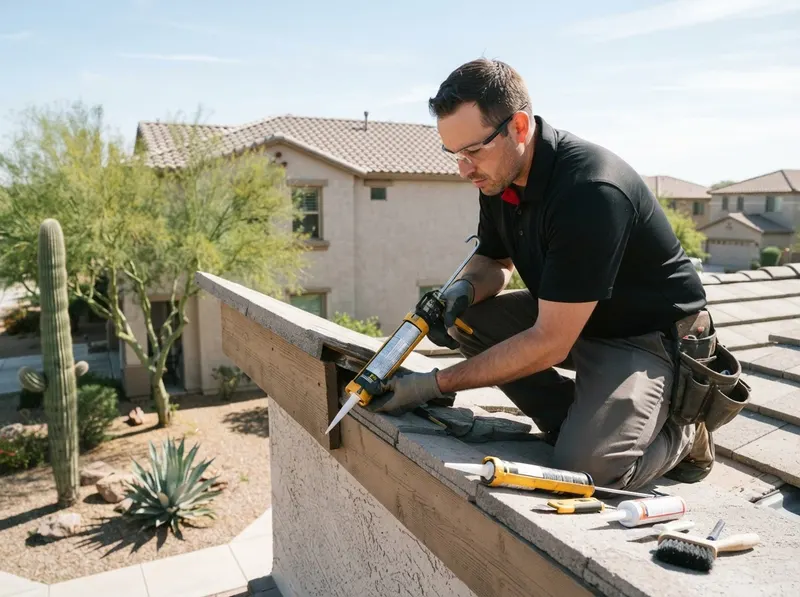
Complete attic sanitation, droppings clearance, snap-trap deployment, and exterior exclusion using heavy-gauge steel hardware cloth. Prevents roof rats from traveling off citrus canopies into attic spaces via tile roof vents and soffit returns. Inspections examine roofline hips, valleys, plumbing stack flashings, and air conditioning line chases. Trapping programs run continuously until monitoring catches reach zero, followed by enzymatic sanitization of contaminated attic insulation to eliminate rodent pheromones.
Get a quote →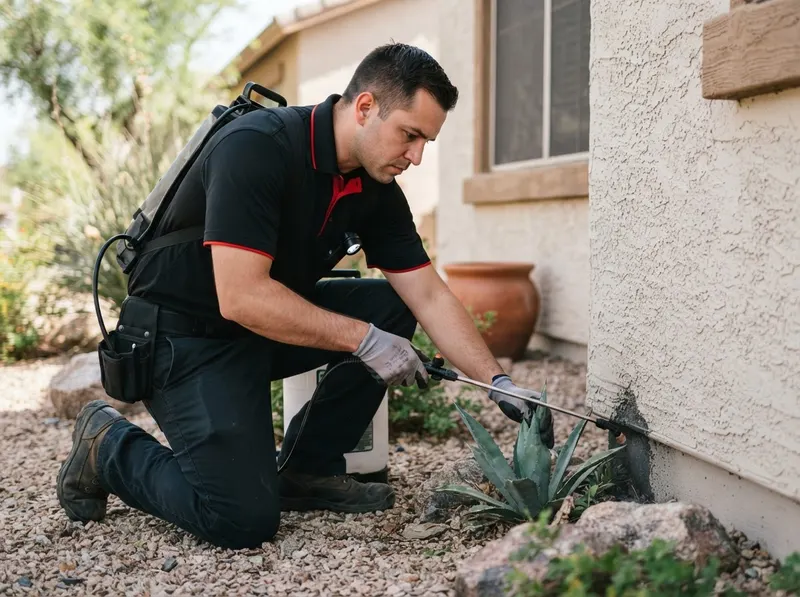
Physical de-webbing of exterior fascia, eaves, block perimeter fencing, and water valve meter boxes. Complemented with micro-crystal contact treatments targeting black widows, wolf spiders, and desert recluse varieties. Technicians physically clear egg sacs from stucco corners, exterior window frames, and outdoor furniture frames. Specialized residual wettable powders are injected directly into irrigation valve sleeves, gas meter covers, and perimeter landscape lighting wells where spiders aggregate.
Get a quote →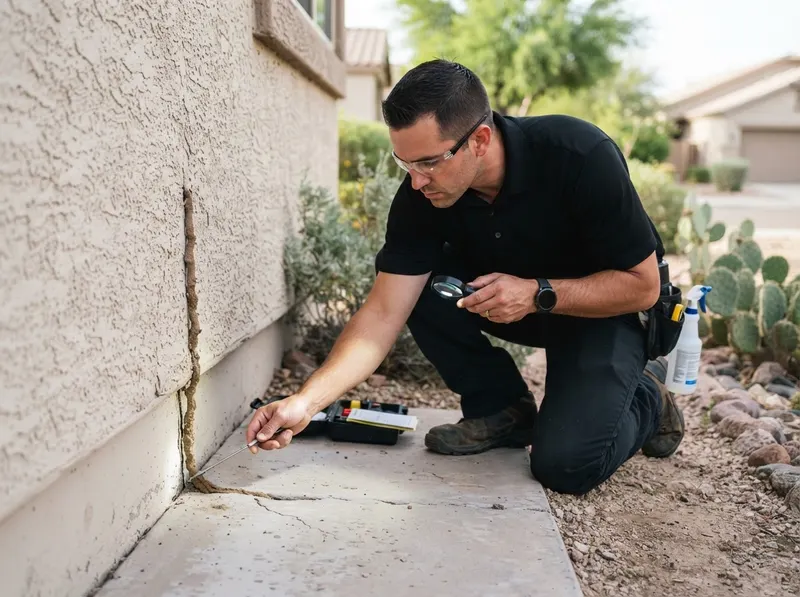
Comprehensive acoustic and visual stem-wall evaluations across post-tension slab foundations. Identifies hidden termite mud tubes, plumbing slab penetrations, and subterranean activity before structural framing wood degrades. Inspectors examine bath traps, carpet tack strips, wall baseboards, and garage foundation junctions with high-intensity illumination and moisture meters. Documentation details exact mud tube entry points, structural wood exposure levels, and localized soil moisture conditions.
Get a quote →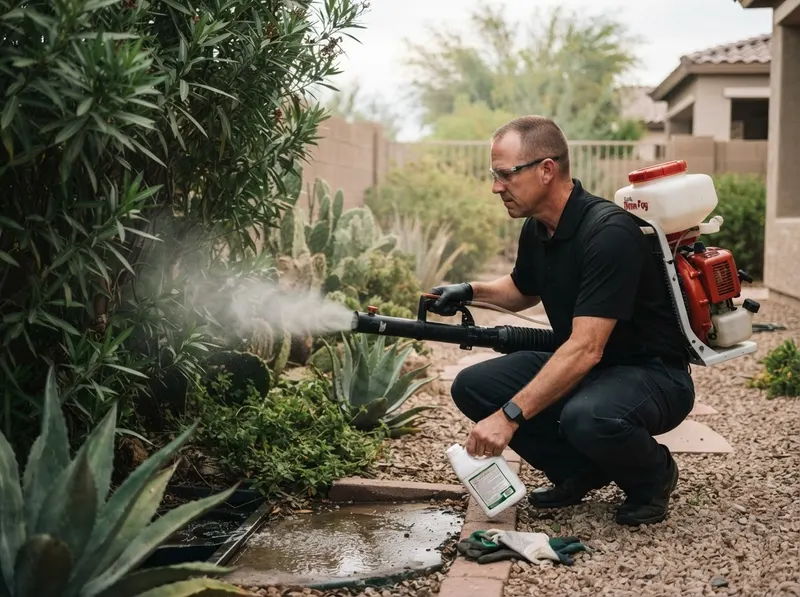
Targeted ultra-low-volume adulticide thermal fogging along dense landscape vegetation paired with slow-release microbial larvicide briquettes in standing yard drainage sumps, French drains, and retention landscape zones. Fogging disrupts resting adult populations hidden beneath dense citrus canopies, oleander hedges, and covered patio ceilings. Solid Bacillus thuringiensis israelensis briquettes are placed into backyard landscape basins, catch basins, and fountain reservoirs to halt mosquito larval development.
Get a quote →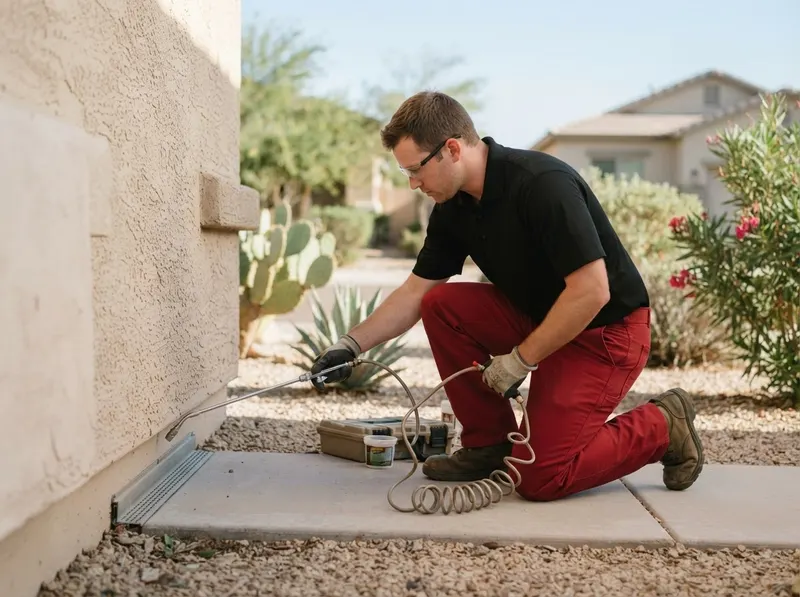
Direct eradication of banded crickets and American sewer roaches that aggregate inside valve boxes, irrigation risers, and drainage weep holes. Eliminates primary live-food prey sources that attract predatory scorpions to property perimeters. Treatments incorporate water-resistant insect growth regulators and granular baits placed deep into decorative rock borders, valve pits, and sewer drain line covers to dismantle breeding cycles before populations migrate indoors.
Get a quote →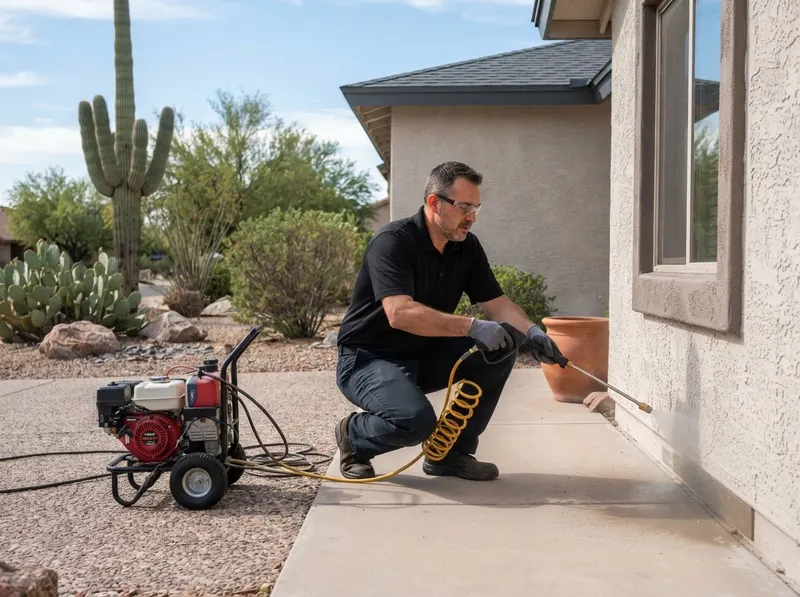
High-pressure hydraulic perimeter soil soaking creating an uninterrupted barrier three feet up the foundation wall and six feet out across gravel borders. Flushes nesting insects out of decorative crushed granite and rock beds. High-volume tank delivery drives residual chemistry past surface gravel into underlying base dirt, preventing desert ants, crickets, and spiders from establishing underground harborage against post-tension foundation walls.
Get a quote →You get a firm, itemized quote for your pest control service before any work begins, no surprises, no pressure.
Careful prep, tidy work, and a full cleanup when we are done. We treat your home and belongings like our own.
The same trusted, background-checked team from the first call to the final check.
Selecting the proper treatment protocol depends on structural construction, lot vegetation, and target species. If a home exhibits interior bark scorpion sightings, homeowners should choose an integrated physical exclusion service that mechanically seals foundation weep screeds, structural expansion joints, and door thresholds with copper mesh and silicone sealants. If a property experiences subterranean termite mud tubes along stem walls, homeowners must choose a targeted non-repellent liquid soil trenching or localized subterranean termiticide application.
The operational trade-off centers on upfront mechanical labor versus continuous chemical retreatments: chemical liquid barriers degrade rapidly under intense 115-degree East Valley ultraviolet radiation, requiring frequent reapplication, whereas physical exclusion entails a higher initial investment but permanently restricts structural entry points. For properties backing up to irrigation canals or mature citrus groves, roof rat exclusion requires pairing mechanical wire-mesh blocking along roof eaves with locked exterior bait stations; relying solely on exterior poison blocks leaves open roof gaps vulnerable to rapid re-infestation. If high ground moisture or landscape drip irrigation supports localized cricket populations, combining perimeter power spraying with granular soil treatments delivers superior knockdown compared to light hand-can liquid sprays, although gravel beds must be thoroughly penetrated down to the underlying soil barrier.
When prioritizing complete attic decontamination following rodent intrusion, pairing mechanical sanitization with HEPA vacuum extraction provides lasting odor elimination and pathogen removal, whereas basic insulation top-offs trap biological waste beneath clean fiberglass batts. Homeowners weighing one-time eradication against ongoing maintenance programs must consider that desert perimeter barriers experience heavy degradation every 60 days under intense Arizona ground heat; a one-time spray eliminates active surface crawlers but fails to interrupt emerging insect egg cycles or prevent seasonal migration from adjacent open land.
Every project gets a firm, written price after a free on-site visit. Ranges below for orientation.
Tell us about your pest control service job and we'll send a clear, written quote, usually the same day. Or just call and talk to a real Gilbert pro.
(855) 690-0238
Properties across Gilbert encounter distinct pest pressures created by the juxtaposition of suburban post-tension slab homes and agricultural irrigation systems. In neighborhoods like Morrison Ranch and Agritopia, remaining dairy farm history, deep citrus root structures, and open greenbelt irrigation canals generate heavy roof rat corridors along high-voltage utility easements. Concurrently, artificial lake developments such as Val Vista Lakes and The Islands support sustained midges and crickets, creating ideal feeding grounds for expanding bark scorpion colonies that navigate decorative river-rock beds and block-wall expansion joints. High summer water-table management around the Riparian Preserve at Water Ranch and Freestone Park keeps subterranean termites active in upper caliche layers throughout dry periods. Residential corridors bordering SanTan Village and the Gilbert Heritage District face severe sewer roach surges during sudden monsoon downpours, requiring heavy mechanical barriers over exterior drain hubs and weep channels.
Free estimates for Gilbert & the surrounding area.
 Saguaro Trail Pest Control